Care, explained
Nail changes, and when to show a doctor
Most nail oddities are harmless. A few are worth a doctor's time. Here is what two named sources say about each, side by side.
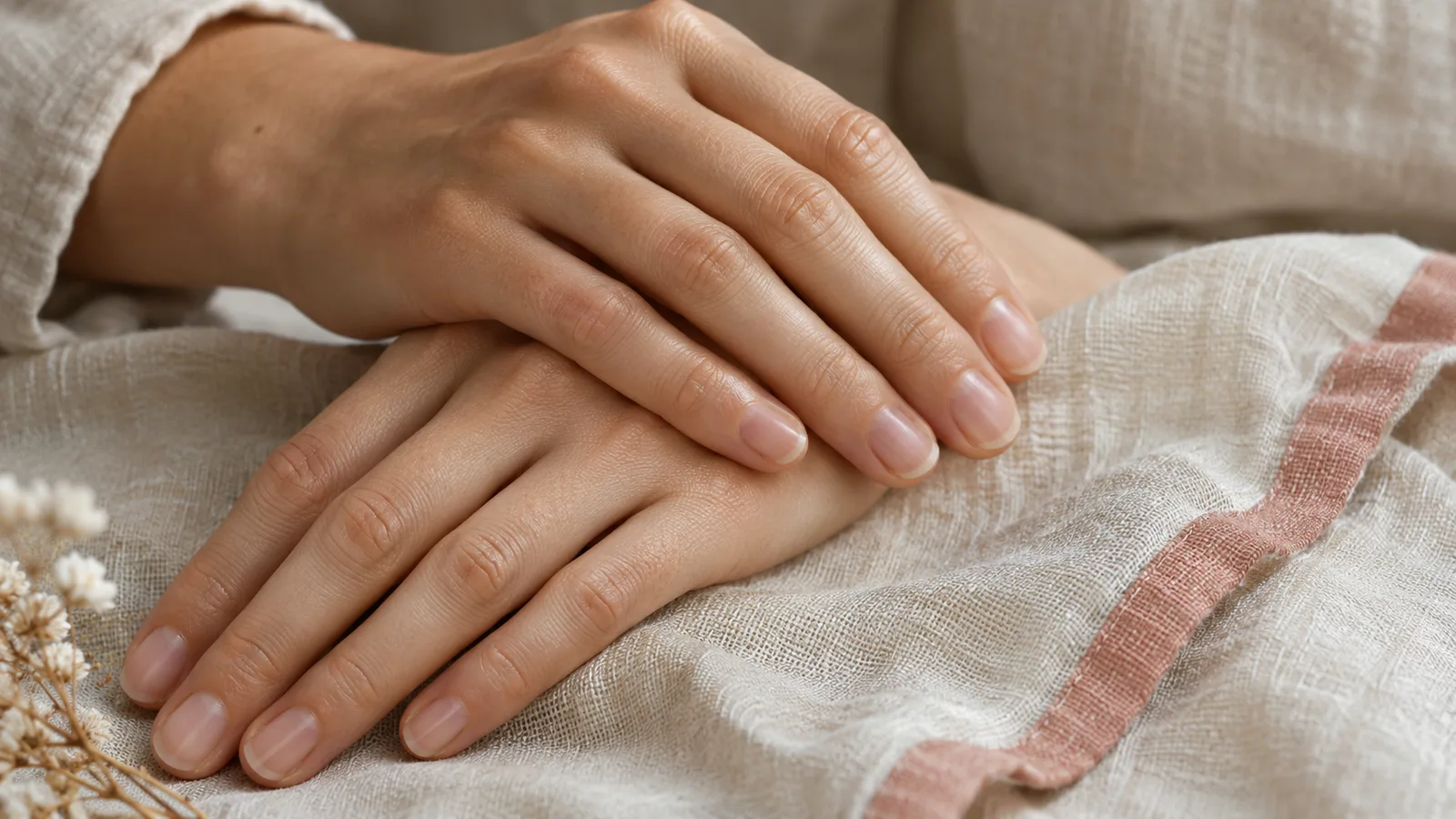
People look at their nails more closely after a manicure, or after taking one off, and that is often when a streak, a ridge or a colour that was not there before turns up. Most of the time it is nothing. The trouble is that a few of these changes are not nothing, and a search engine is a poor way to tell the two apart.
So this page does something narrower. It lays out what the American Academy of Dermatology (AAD) and the NHS each say a change can be linked to, and whether they say to see a doctor. The NHS also says nail problems can sometimes be a symptom of a more serious or long-term condition.[2]
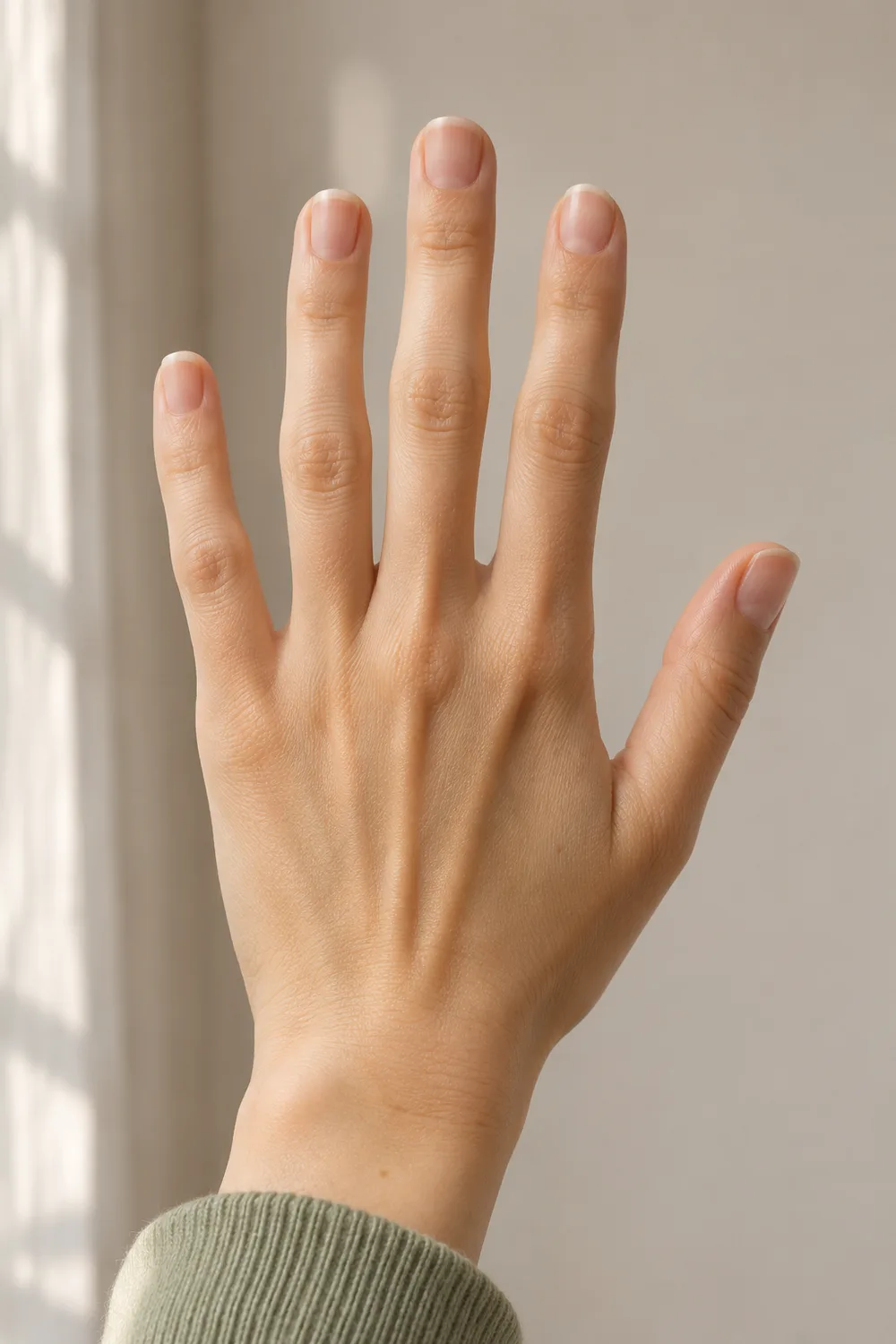
| Change | What the source links it to | Says to see a doctor? | Source |
|---|---|---|---|
| New or changing dark streak (melanonychia) | Could be melanoma, a serious skin cancer | Yes: a dermatologist, for a skin cancer check | AAD[1] |
| Nail lifting off the bed (onycholysis) | Fungal infection, psoriasis, injury from manicures | Yes: a dermatologist should examine any lifting nail | AAD[1] |
| Redness and swelling around the nail | Possible infection | Not stated | AAD[1] |
| Greenish-black nail | A bacterial nail infection | Not stated | AAD[1] |
| Pitting | A disease affecting the whole body; psoriasis, atopic dermatitis, alopecia areata | Yes: a board-certified dermatologist, for a diagnosis | AAD[1] |
| Yellow nails | Possibly something going on inside the body | Not stated | AAD[1] |
| Deep grooves (Beau lines) | Something slowed or stopped nail growth for a while | Yes, if you cannot think what caused it: a dermatologist or primary care doctor | AAD[1] |
| Thick, overgrown nails (onychogryphosis) | Psoriasis, ichthyosis or circulation problems | A podiatrist or dermatologist can cut and treat them | AAD[1] |
| Spoon-shaped nails (koilonychia) | Possibly not enough iron | Not stated | AAD[1] |
| Washboard grooves on thumbnails | Picking at or pushing back the cuticles | A dermatologist may help break the habit | AAD[1] |
| Curved nails (clubbing) | Disease of the lungs, heart, liver or digestive system | Yes: a board-certified dermatologist | AAD[1] |
| Colour changes (blue, pale, white, half pink and half white, dusky red or blue half-moons) | A range of conditions, from anaemia to liver, kidney, lung or heart disease | Yes: a board-certified dermatologist for any changes | AAD[1] |
| Nail changed shape or colour, or fell off, and you do not know why | Not stated | Yes: see a GP (non-urgent advice) | NHS[2] |
| Painful, red, swollen, warm skin around the nail (paronychia) | A possible infection or ingrown toenail | Yes: see a GP (non-urgent advice) | NHS[2] |
| Nails too tough to cut or hard to reach | Not stated | See a podiatrist | NHS[2] |
| Spoon-shaped nails | Can be a sign of iron-deficiency anaemia | Not stated | NHS[2] |
| Small dents or pits | Can be a sign of nail psoriasis, eczema or alopecia | Not stated | NHS[2] |
| Deep lines or grooves (Beau lines) | May happen when you are ill but should grow out | Not stated | NHS[2] |
| Clubbing | Can be a sign of many serious, long-term conditions | Not stated | NHS[2] |
| Thicker or brittle nails with age | Normal with ageing, says the NHS | Not stated | NHS[2] |
Sources
- AAD, 12 nail changes a dermatologist should examine, checked 18 November 2026.
- NHS, Nail problems, checked 18 November 2026.
Keep reading
Care, explained
How long does a nail take to grow back?
A snapped corner is a matter of weeks. A lost nail is a matter of months. Here is the arithmetic, and the point where it stops being useful.
Care, explained
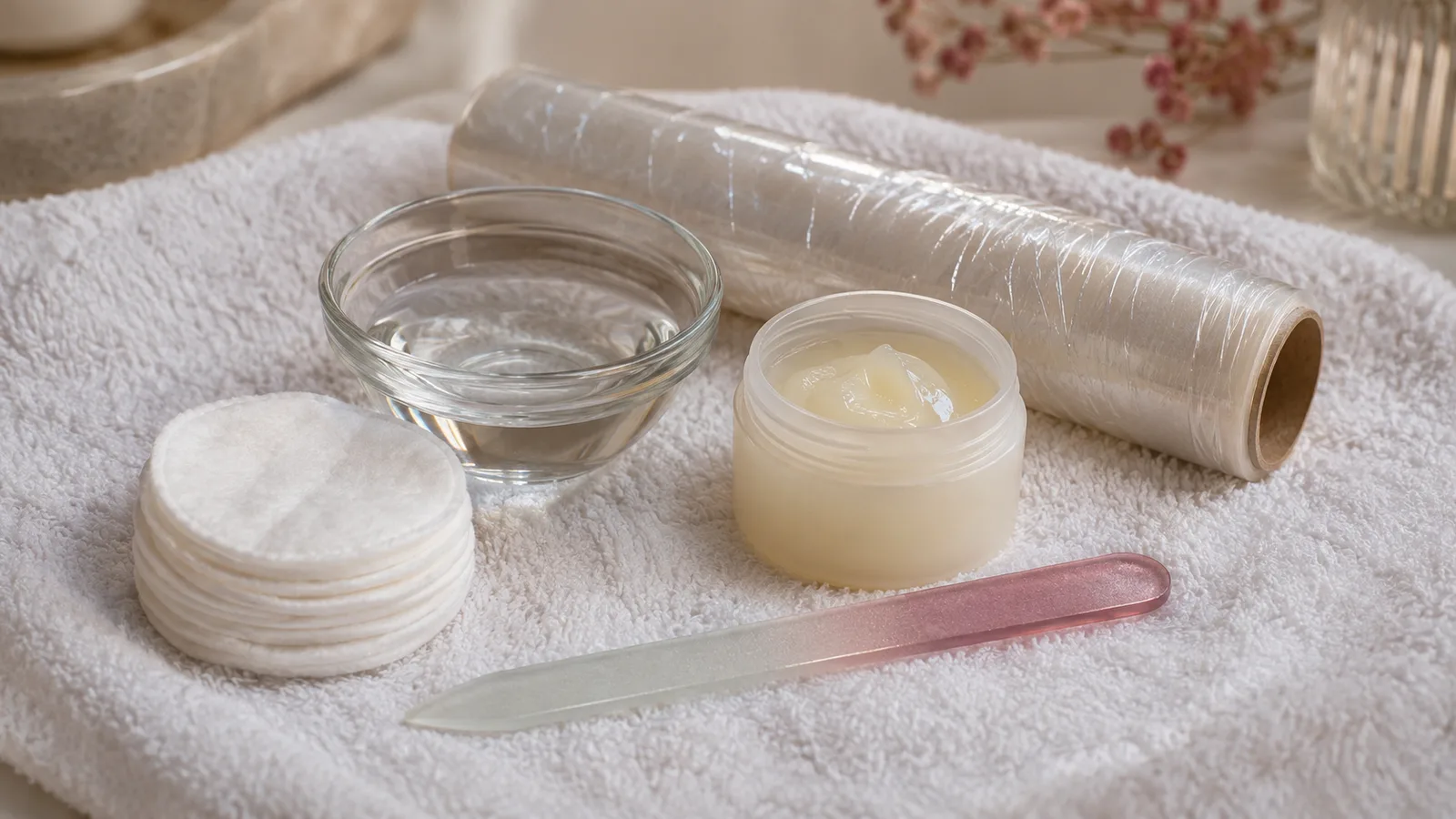
How to remove gel polish at home without wrecking your nails
Acetone, cotton and plastic wrap will do it. The dermatologists' advice is as much about what to leave alone as what to do.