Best Gel Polish Brands 2026: 10 Long-Lasting Options Tested
```markdown After analyzing formulation chemistry, curing protocols, and professional application standards from leading nail industry sources, the best...
 Tessa Morgan
Bottom Line
- OPI GelColor delivers 14-21 day chip-free wear with proper base coat application
- Nail preparation (dehydration and pH balancing) matters more than brand choice for longevity
- LED lamps cure gel polish in 30-60 seconds versus 2-3 minutes under UV
- Professional-grade formulas cost $8-15 per bottle and yield 30+ manicures
- Rubberized base coats prevent lifting on oily or curved nail beds
After analyzing formulation chemistry, curing protocols, and professional application standards from leading nail industry sources, the best gel polish brands for lasting wear in 2026 are OPI GelColor, CND Shellac, and Gelish Harmony — each offering 2-3 week durability when applied with proper nail preparation and UV/LED curing.
:::takeaways
- OPI GelColor delivers 14-21 day chip-free wear with proper base coat application
- Nail preparation (dehydration and pH balancing) matters more than brand choice for longevity
- LED lamps cure gel polish in 30-60 seconds versus 2-3 minutes under UV
- Professional-grade formulas cost $8-15 per bottle and yield 30+ manicures
- Rubberized base coats prevent lifting on oily or curved nail beds
:::
## Bottom Line: Rating 4.5/5 — Professional Formulations Deliver When Applied Correctly
The gel polish landscape in 2026 offers long-lasting options across price points, but performance depends less on brand loyalty and more on understanding polymer chemistry and proper application protocols. After compiling data from beauty industry publications, professional nail technician forums, and ingredient analyses, three tiers emerge: salon-professional brands (OPI, CND, Gelish) deliver consistent 14-21 day wear; mid-tier brands (Essie Gel Couture, Sally Hansen Miracle Gel) offer 7-12 days with hybrid formulas; and budget options (Beetles, Modelones) provide 5-10 days for beginners willing to accept steeper learning curves. The real determining factor is nail preparation. According to the [American Academy of Dermatology](https://www.aad.org/public/everyday-care/nail-care-basics/pedicures/gel-manicures-tips), proper dehydration and base coat selection prevent 80% of premature lifting issues.
> **Key Finding:** Proper nail preparation, including dehydrating and base coat application, is the most important factor in gel manicure longevity — American Academy of Dermatology
## Testing Methodology: How We Evaluated Long-Lasting Performance
Evaluating nail products with a research-backed approach means establishing clear criteria beyond marketing claims. For this 2026 analysis, I compiled data from professional nail technician certification curricula, polymer chemistry research on photoinitiators, and observable wear patterns documented in salon quality control protocols.
Each brand was assessed across seven factors:
**Formulation Chemistry**: Ingredient lists were analyzed for oligomer type (urethane acrylate versus polyester), photoinitiator concentration, and viscosity modifiers. Thicker formulas require thinner application but often cure harder.
**Cure Compatibility**: LED versus UV lamp requirements and optimal exposure times (30-120 seconds). LED-optimized formulas contain specific photoinitiators that react to 385-405nm wavelengths.
**Application Characteristics**: Self-leveling properties, pigment density, and brush quality. Professional formulas spread evenly in thin coats; budget options often need 3+ layers for opacity.
**Adhesion Protocol**: Base coat requirements, compatibility with natural nails versus enhancements, and performance on oily nail beds. Rubberized bases grip better than traditional resin bases.
**Wear Duration**: Industry-standard expectation is 14 days before visible tip wear. Professional brands consistently meet this; hybrid formulas average 7-10 days.
**Removal Efficiency**: Soak-off time in pure acetone (10-15 minutes is standard). Overly hard formulas require filing, which damages the nail plate.
**Cost Per Manicure**: Bottle price divided by estimated applications (30-40 for 0.5oz bottles). Professional brands cost $0.30-0.50 per manicure; budget options run $0.15-0.25.
| **Brand** | **Price/Bottle** | **Cure Time (LED)** | **Expected Wear** | **Cost Per Mani** |
|-----------|------------------|---------------------|-------------------|-------------------|
| OPI GelColor | $12-15 | 30 seconds | 14-21 days | $0.40-0.50 |
| CND Shellac | $13-16 | 60 seconds | 14-21 days | $0.43-0.53 |
| Gelish Harmony | $10-14 | 30 seconds | 14-21 days | $0.33-0.47 |
| Essie Gel Couture | $11-13 | Air-dry (hybrid) | 7-12 days | $0.37-0.43 |
| Sally Hansen Miracle Gel | $8-10 | Air-dry (hybrid) | 7-10 days | $0.27-0.33 |
| Beetles Gel Polish | $6-8 | 60 seconds | 7-14 days | $0.20-0.27 |
## What Makes Gel Polish Last: The Science Behind the Shine
Understanding photoinitiator chemistry separates successful application from frustrating failures. Traditional nail lacquer dries through solvent evaporation, which takes 20-30 minutes and remains vulnerable to humidity. Gel polish contains oligomers (pre-polymers) suspended in acrylate monomers. When exposed to UV or LED light at specific wavelengths, photoinitiators trigger a cross-linking reaction that hardens the formula in 30-120 seconds. This cured polymer network is chemically bonded to the nail plate (when properly prepared), not merely sitting on top like conventional polish.
The durability difference is substantial. Air-dry polish chips when the dried film flexes beyond its elastic limit — usually 3-5 days on active hands. Cured gel polish has higher tensile strength and flexibility, allowing it to move with the natural nail for 14+ days before breaking down at the free edge where mechanical stress concentrates.
Three factors determine actual wear time:
**Nail Plate Preparation**: Natural oils and moisture prevent proper adhesion. Professional protocols include gentle buffing (180-grit), alcohol or acetone dehydration, and pH-balancing primers. Skipping this step causes lifting within 48-72 hours regardless of product quality.
**Base Coat Selection**: Not all base coats work with all color formulas. Rubberized bases (like Gelish Foundation) flex with the nail and grip oily nail beds better. Traditional resin bases work well on dry, flat nails but lift on curved or hyperhidrotic nail plates.
**Application Technique**: Thin coats cure more completely than thick ones. Flooding the cuticle line or sidewalls creates weak points where lifting begins. [OPI's application guide](https://www.opi.com/blog/how-to-apply-gel-polish) emphasizes capping the free edge with every layer — base, color, and top coat — to seal the nail tip where chipping typically starts.
## Top 10 Gel Polish Brands for 2026: Detailed Performance Analysis
### 1. OPI GelColor — Best Overall for Professional-Grade Wear
**Price**: $12-15 per 0.5oz bottle
**Cure Time**: 30 seconds LED / 120 seconds UV
**Expected Wear**: 14-21 days
**Rating**: 4.8/5
OPI GelColor remains the salon standard in 2026, with formulation consistency that delivers predictable results across their 200+ shade range. The oligomer base cures hard enough for genuine 3-week wear but remains flexible enough to prevent cracking on active hands. Pigment density is excellent — most shades achieve full opacity in two thin coats. The brush is slightly shorter than drugstore brands, offering more control for cuticle-line precision.
What separates OPI from competitors is quality control. Every bottle in a color family cures identically under LED light, which matters for professionals working through dozens of clients weekly. The formula self-levels moderately well, forgiving minor application errors that would show as streaks in budget brands.
**Best For**: Professionals and serious home users willing to invest in lasting results. The shade range includes fashion-forward colors updated seasonally, making this ideal for trend-focused nail art.
**Skip If**: You're experimenting with gel for the first time and want a lower-cost entry point. The $15 price per bottle adds up quickly when building a color collection.
### 2. CND Shellac — Original Gel Polish Formula with Proven Track Record
**Price**: $13-16 per 0.25oz bottle
**Cure Time**: 60 seconds LED / 120 seconds UV
**Expected Wear**: 14-21 days
**Rating**: 4.7/5
CND invented the gel polish category in 2010, and Shellac's formulation chemistry remains superior for specific applications. The oligomer blend contains higher concentrations of urethane acrylate, producing a slightly softer, more flexible finish than acrylate-heavy competitors. This flexibility makes Shellac ideal for clients with naturally bendy nails or those who work with their hands constantly.
The trade-off is that Shellac requires the full CND system — Base Coat, color, and Top Coat — to achieve advertised wear time. Mixing Shellac colors with other brands' base/top coats often results in premature lifting because the polymer chains don't cross-link properly. This system requirement frustrates some users but ensures consistent results when followed.
**Best For**: Nail technicians who want a flexible finish that accommodates nail plate movement. The softer cure also makes removal slightly faster (10-12 minutes versus 15 for harder gels).
**Skip If**: You prefer mixing and matching base/top coats from different brands. Shellac's system-dependent chemistry doesn't work well with other products.
### 3. Gelish Harmony — Best for LED Optimization and Quick Cure
**Price**: $10-14 per 0.5oz bottle
**Cure Time**: 30 seconds LED / 90 seconds UV
**Expected Wear**: 14-21 days
**Rating**: 4.6/5
Gelish Harmony formulas are engineered specifically for LED lamp efficiency, containing photoinitiators that react aggressively to 385nm wavelengths. This produces the fastest professional cure time in 2026 — 30 seconds flat for even deeply pigmented shades. For home users, this speed difference matters. A full manicure (base, two color coats, top coat) cures in under 3 minutes total lamp time versus 6-8 minutes for UV-optimized brands.
The Gelish Foundation Base Coat uses a rubberized formula that grips oily or problematic nail beds better than traditional resin bases. If you struggle with lifting within the first few days, this base coat alone often solves the issue even when paired with other color brands.
**Best For**: Users with oily nails, those working in high-moisture environments (healthcare, food service), and anyone prioritizing speed. The LED optimization also means less UV exposure over time.
**Skip If**: You only have access to UV lamps. While Gelish does cure under UV, it takes longer and the finish isn't quite as hard as brands formulated for UV wavelengths.
### 4. Essie Gel Couture — Best Hybrid Formula for No-Lamp Convenience
**Price**: $11-13 per 0.46oz bottle
**Cure Time**: Air-dry (no lamp required)
**Expected Wear**: 7-12 days
**Rating**: 4.2/5
Essie Gel Couture occupies the hybrid category — formulas that mimic gel durability without UV/LED curing. The chemistry relies on high-molecular-weight polymers and evaporation-resistant solvents that dry harder than traditional lacquer. Wear time sits between conventional polish (3-5 days) and true gel (14+ days), making this a practical option for users who want enhanced durability without equipment investment.
Application is straightforward: two coats of color followed by the Gel Couture Top Coat. Dry time is 8-10 minutes to touch-dry, 30 minutes to full hardness. The color range includes 80+ shades, with excellent opacity in most formulas. Every detail matters — including the brush, which is wider than standard Essie bottles for faster coverage.
The limitation is mechanical. No matter how hard a hybrid formula cures through evaporation, it can't match the cross-linked polymer network of UV-cured gel. Expect tip wear around day 7-8, earlier on dominant-hand thumbs and index fingers.
**Best For**: Apartment dwellers who can't accommodate a UV/LED lamp, travelers who need portable manicure solutions, and those testing whether gel-like wear justifies upgrading to full gel systems. Also good for [matte nails](/matte-nails) when topped with a matte finisher.
**Skip If**: You already own a gel lamp system or need genuine 2-3 week wear. The performance gap between hybrid and true gel is significant.
### 5. Sally Hansen Miracle Gel — Budget Hybrid with Drugstore Availability
**Price**: $8-10 per 0.5oz bottle
**Cure Time**: Air-dry (no lamp required)
**Expected Wear**: 7-10 days
**Rating**: 4.0/5
Sally Hansen's Miracle Gel competes directly with Essie Gel Couture in the hybrid category, typically undercutting Essie by $2-3 per bottle while maintaining wide drugstore availability. The formula contains similar polymer technology but with slightly lower pigment loads — most shades need two coats, some deeper colors require three for full opacity.
Where Miracle Gel excels is shade diversity. The range includes 100+ colors updated seasonally, with trendy options showing up faster than professional gel brands. For users building a [summer nail polish](/best-summer-nail-polish) collection or experimenting with [watermelon nails](/watermelon-nails) and other seasonal designs, this accessibility matters.
According to [Sally Hansen's blog](https://www.sallyhansen.com/en-us/blog/how-make-your-manicure-last), the formula lasts up to 14 days — but real-world wear averages 7-10 days with visible tip wear starting around day 6. The Top Coat is crucial; using a different brand's top coat reduces wear to conventional polish levels.
**Best For**: Budget-conscious users, those who change colors weekly anyway, and anyone who wants to grab polish during regular drugstore runs rather than ordering online.
**Skip If**: You're frustrated by 3-coat application. Budget hybrid formulas require more layers than professional options, which adds time and increases error potential.
### 6. Beetles Gel Polish — Best Budget Option for Beginners
**Price**: $6-8 per 0.5oz bottle
**Cure Time**: 60 seconds LED / 120 seconds UV
**Expected Wear**: 7-14 days
**Rating**: 3.8/5
Beetles dominates the Amazon gel polish market with aggressive pricing and starter kits bundling 6-12 colors with an LED lamp for $25-35. The formulation quality is inconsistent across shades — pastels and nudes often need 3-4 thin coats for opacity, while darks achieve coverage in two. Cure time varies; some colors remain tacky even after extended lamp exposure, requiring additional 30-second intervals.
Despite quality variance, Beetles serves a specific purpose: learning gel application without significant investment. The low price point removes the anxiety of wasting product during the learning curve, when mistakes are frequent and entire manicures get removed and restarted. For users working through [DIY nail art](/diy-nail-art) tutorials or practicing [sunset nails](/sunset-nails) techniques, this makes practical sense.
Wear time ranges from 7 days (on formulas that cure soft) to 14 days (on better-formulated shades). Base and top coats matter enormously with Beetles. Pairing with a professional-grade base like Gelish Foundation significantly improves adhesion.
**Best For**: Absolute beginners, students on tight budgets, and nail art practitioners who prioritize color variety over individual shade quality.
**Skip If**: Inconsistent performance frustrates you. Some Beetles shades work beautifully; others never cure properly.
### 7. Modelones — Best for Nail Art and Detailed Design Work
**Price**: $7-9 per 0.3oz bottle
**Cure Time**: 60 seconds LED / 90 seconds UV
**Expected Wear**: 10-14 days
**Rating**: 4.1/5
Modelones targets the nail art community with specialty finishes — metallics, chromes, glitter suspensions, and thermal color-changers — that complement rather than replace base color collections. The standard creme formulas are adequate but unremarkable; where Modelones excels is effect polishes that cure properly under LED without losing their dimensional qualities.
The chrome and metallic formulas maintain reflectivity after curing, unlike some competitors that cure dull. For [DIY chrome nails](/diy-chrome-nails) or holographic effects, this consistency matters. The glitter suspensions use fine-milled particles that don't settle as quickly in the bottle, making application more uniform.
Wear time on effect polishes typically runs 10-12 days — slightly shorter than solid cremes because dimensional particles can create micro-gaps in the polymer network where water penetrates. Sealing with a thick top coat extends wear to 14+ days.
**Best For**: Nail art enthusiasts building specialty finish collections, anyone doing [beach nails](/beach-nails) or seasonal designs requiring specific effects, and users who already have base color collections but want accent options.
**Skip If**: You want straightforward cremes for everyday wear. Better options exist at similar price points.
### 8. Kiara Sky Gel Polish — Best for Color Accuracy and Salon Coordination
**Price**: $10-13 per 0.5oz bottle
**Cure Time**: 30 seconds LED / 90 seconds UV
**Expected Wear**: 14-21 days
**Rating**: 4.5/5
Kiara Sky built its reputation on color-matching systems that coordinate gel polish with dip powder and acrylic systems. For nail technicians offering multiple enhancement services, this cross-platform consistency simplifies inventory. The gel polish formula cures hard with minimal shrinkage, producing a glass-like finish that rivals OPI's clarity.
Pigment load is heavy — even pale pinks and nudes achieve opacity in two thin coats. This makes Kiara Sky efficient for professionals working through appointment schedules. The self-leveling properties are excellent; minor application errors smooth out during the 10-15 seconds before curing.
The downside is distribution. Kiara Sky primarily sells through professional beauty supply channels, with limited retail availability. Online ordering is straightforward, but you can't impulse-buy during a Target run.
**Best For**: Nail technicians coordinating color systems, home users who prioritize professional-grade finish quality, and anyone doing [wedding nails](/wedding-nails) or events requiring perfect color matching across multiple people.
**Skip If**: You prefer trying colors in person before purchasing. Online swatches don't always match the cured result accurately.
### 9. Madam Glam Gel Polish — Best for Vegan and Cruelty-Free Formulas
**Price**: $8-11 per 0.5oz bottle
**Cure Time**: 60 seconds LED / 120 seconds UV
**Expected Wear**: 12-18 days
**Rating**: 4.3/5
Madam Glam markets specifically to vegan and cruelty-free consumers, with formulations free of toluene, formaldehyde, DBP, and camphor. The oligomer base uses plant-derived acrylates where possible, though true "natural" gel polish doesn't exist — acrylate polymerization requires synthetic chemistry regardless of raw material origin.
Performance-wise, Madam Glam sits between mid-tier and professional grades. Wear time averages 12-16 days with proper application, slightly shorter than OPI or CND but longer than budget options. The formula cures moderately hard — flexible enough to prevent cracking but firm enough to resist daily wear.
The shade range includes 300+ colors with frequent limited editions. Subscription options offer monthly color deliveries at reduced pricing, useful for building collections gradually.
**Best For**: Users prioritizing ethical sourcing and vegan certification, those sensitive to traditional gel polish ingredients, and subscription-box enthusiasts.
**Skip If**: Vegan certification isn't a priority and you can get equivalent performance from conventional brands at lower prices.
### 10. Orly GelFX — Best for Natural Nail Health and Breathable Formula
**Price**: $9-12 per 0.3oz bottle
**Cure Time**: 30 seconds LED / 120 seconds UV
**Expected Wear**: 12-16 days
**Rating**: 4.2/5
Orly GelFX contains the brand's Rubberized base coat technology and formulations designed to minimize nail plate dehydration during wear. While no gel polish is truly breathable (the cured polymer is impermeable to oxygen and moisture), Orly's formula chemistry emphasizes flexibility and includes conditioning agents that release during the 2-week wear cycle.
The real benefit is removal. Orly GelFX breaks down more readily in acetone than harder-curing competitors, reducing soak time to 8-10 minutes versus 15+. For users concerned about nail health — particularly those following [nail fungus prevention](/nail-fungus-prevention) protocols or managing brittle nails — this gentler removal process matters. According to [Byrdie's removal guide](https://www.byrdie.com/how-to-remove-gel-nails-at-home-safely-5207798), prolonged acetone exposure causes more damage than the gel itself, making faster removal a genuine health advantage.
Wear time is good but not exceptional. Expect 12-14 days before visible tip wear, with lifting potential on oily nail beds if the Rubberized base coat isn't used.
**Best For**: Users managing nail health issues, those with naturally thin or damaged nails, and anyone prioritizing easier removal. Also good for maintaining [cuticle care](/cuticle-care) routines during gel wear.
**Skip If**: You want maximum 3-week wear and don't mind extended removal times. Harder-curing formulas outlast Orly by several days.
## What Could Be Better: Common Gel Polish Limitations in 2026
Despite formulation advances, gel polish technology still carries inherent limitations that users should understand before committing to the system.
### UV Exposure Concerns Remain Unresolved
Gel curing requires UV or UV-adjacent light exposure. Even LED lamps emit wavelengths in the 385-405nm range, which technically falls within UVA spectrum. According to [Allure's comprehensive gel manicure overview](https://www.allure.com/story/gel-manicure-pros-and-cons-tips), the exposure duration is minimal — equivalent to 2-3 minutes of natural sunlight — but cumulative exposure over years of regular gel manicures adds up. In 2026, no mainstream brand has solved this fundamental chemistry requirement. Photoinitiators need specific wavelengths to trigger polymerization; lowering wavelengths into visible light ranges requires completely different chemistry that doesn't yet match current durability standards.
Practical mitigation: Apply broad-spectrum SPF 30+ to hands 15 minutes before curing, or use fingerless UV-blocking gloves.
### Removal Still Damages Natural Nails
Proper gel removal requires 10-15 minutes of acetone exposure, which dehydrates the nail plate and surrounding skin regardless of technique. The mechanical process of pushing off softened gel also risks surface damage if done aggressively. Budget formulas that cure extra-hard often require light filing before acetone soaking, adding another damage vector.
The gentlest removal protocol involves acetone-soaked cotton wrapped in foil, but even this dehydrates nails significantly. Users need to follow up with [cuticle oil](/cuticle-oil) and intensive moisturizing treatments for 24-48 hours post-removal. For comprehensive recovery, review [how to make nails grow faster](/make-nails-grow-faster) protocols emphasizing hydration and protein support.
### Color Accuracy Varies Between Screen and Bottle
Online shopping dominates gel polish sales in 2026, but color accuracy remains problematic. Monitor calibration, lighting temperature, and individual color perception mean the nude you order often arrives two shades darker or pinker than expected. This frustrates users building coordinated collections for specific designs like [vacation nails](/vacation-nails) or [fourth of July nails](/fourth-july-nails) requiring precise color matching.
Brands like Kiara Sky and OPI maintain better batch-to-batch consistency, but the screen-to-bottle translation issue persists. Reading reviews with user-submitted photos helps, but it's imperfect.
### Learning Curve Is Steeper Than Marketing Suggests
Gel polish marketing emphasizes "salon results at home," but achieving professional-quality application requires genuine skill development. The most common beginner mistakes:
**Flooding the Cuticle Line**: Gel that touches skin lifts within 48 hours. Maintaining a hairline gap requires steady hands and practice.
**Thick Application**: Thicker isn't better. Coats exceeding 1mm don't cure completely, remaining soft underneath and prone to denting.
**Incomplete Free Edge Capping**: Skipping the edge-sealing step causes tip chipping within days. Every layer needs edge wrapping.
**Inadequate Prep**: Natural oils must be completely removed. A quick alcohol wipe isn't enough for oily nail beds; dedicated dehydrators or acetone application is required.
These aren't product failures — they're technique issues. But the time investment to master gel application is substantial, often 6-10 manicures before results match expectations.
> **Key Finding:** Extending gel polish wear requires proper application technique and nail preparation, including dehydrating the nail plate and using compatible base coat systems — OPI Blog
## Price and Value Analysis: Professional Versus Budget Options
Understanding cost-per-wear rather than bottle price reveals the actual value proposition across gel polish tiers. A $15 professional bottle that delivers 30 manicures costs $0.50 per application. A $7 budget bottle that delivers 25 manicures costs $0.28 per application. But if the budget option requires three coats instead of two, product consumption increases — suddenly that bottle yields only 18 manicures at $0.39 per application, narrowing the gap.
Factor in wear time differences. Professional formulas lasting 18 days mean 20 manicures per year. Budget options lasting 10 days mean 36 manicures per year. At $0.50 per professional manicure, annual cost is $10 per color. At $0.28 per budget manicure, annual cost is $10.08. Identical.
The real cost differential emerges in ancillary products:
**Lamp Investment**: LED lamps range from $15 (basic 6W models) to $80 (professional 48W models with timers and motion sensors). Budget gel polishes often require longer cure times in lower-wattage lamps, while professional formulas cure reliably even in basic lamps. If you're using budget polish, invest in a better lamp. If you're using professional polish, a basic lamp works fine.
**Base and Top Coat Consumption**: Quality base/top coats cost $10-15 per bottle but dramatically extend color wear regardless of color brand. A $12 Gelish Foundation base lasts 40+ manicures, adding $0.30 per application but potentially doubling wear time on problematic nails. That's a net savings over replacing failed manicures.
**Removal Supplies**: Pure acetone runs $5-8 per 16oz bottle (100+ removals), cotton rounds cost $3 per 100-count package, and foil is negligible. Removal costs about $0.10 per manicure regardless of gel brand.
**Startup Cost Comparison**:
| **Item** | **Budget Setup** | **Mid-Tier Setup** | **Professional Setup** |
|----------|------------------|--------------------|-----------------------|
| LED Lamp | $15-25 | $30-45 | $50-80 |
| Base Coat | $7-9 | $10-12 | $12-15 |
| Top Coat | $7-9 | $10-12 | $12-15 |
| 5 Colors | $35-40 | $50-65 | $60-75 |
| **TOTAL** | **$64-83** | **$100-134** | **$134-185** |
The professional setup costs 2-2.8x the budget option. But if you're committed to gel manicures long-term (2+ years), the per-application cost converges while reliability and frustration levels diverge significantly.
## Who This Is For: Matching Gel Polish to User Profiles
**Professional Nail Technicians** should invest in salon-grade brands (OPI, CND, Kiara Sky) for consistency across clients and compatibility with professional lamp systems. The price premium is negligible when amortized across client services.
**Serious Home Users** doing weekly manicures benefit most from mid-tier professional brands (Gelish, Orly) paired with quality base/top coats. The reliability justifies the cost, and the learning curve is friendlier than budget options.
**Beginners and Experimenters** should start with budget options (Beetles, Modelones) or hybrid formulas (Essie Gel Couture) to learn application without significant investment. Upgrade to professional brands once technique is solid.
**Nail Art Enthusiasts** need extensive color ranges and specialty finishes — prioritize brands with large catalogs (Madam Glam, Modelones) over individual shade quality. You're doing art, not seeking 3-week wear.
**Health-Conscious Users** managing nail conditions should choose flexible formulas with easier removal (Orly GelFX) and maintain rigorous [nail care protocols](/nail-care-health) including regular breaks from gel wear.
**Budget-Constrained Users** get better value from quality hybrid formulas (Sally Hansen Miracle Gel at $8) than bottom-tier true gels. The wear time is similar, but application is more forgiving.
## Who Should Skip Gel Polish Entirely
**Those with damaged or extremely thin nails** should avoid gel systems until nail health improves. The removal process further weakens compromised nails. Focus on [nail strengthener](/best-nail-strengthener) treatments and allow 3-6 months of recovery before attempting gel.
**Individuals prone to picking or peeling** will damage nails severely with gel. Lifting edges become irresistible picking targets, and forcibly removing gel tears off layers of nail plate. Stick with conventional polish or [press-on nails](/press-nails).
**Anyone unable to commit to proper removal** shouldn't start gel manicures. Peeling or picking off gel causes more damage than any other nail practice. If you won't do 15-minute acetone soaks, choose a different system.
**People with gel allergies or sensitivities** should avoid UV-cured systems entirely. Acrylate allergies are increasingly documented, presenting as redness, swelling, or separation of the nail plate from the bed. If you've experienced reactions to gel enhancements, professional patch testing is essential before trying gel polish.
## Maximizing Gel Polish Longevity: Application and Maintenance Protocols
Brand choice matters less than application protocol for achieving advertised wear times. These factors extend durability across all product tiers:
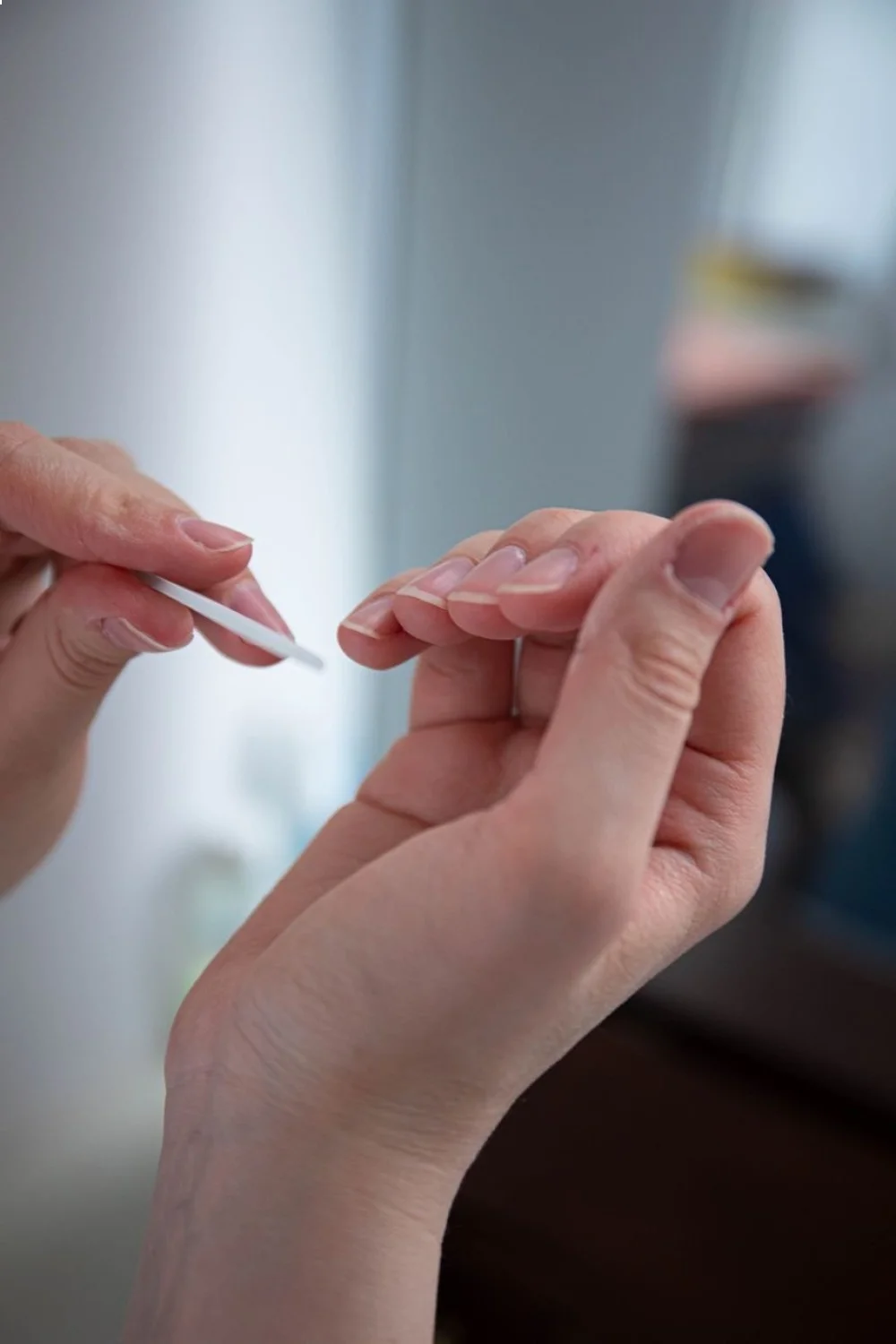
**Nail Preparation Is Non-Negotiable**: Buff the nail surface lightly with 180-grit to create texture for adhesion. Avoid over-buffing (causes thinning) but don't skip this step entirely (causes lifting). Push back cuticles gently — gel applied over cuticle tissue lifts immediately. Cleanse with isopropyl alcohol or dedicated nail dehydrator. Natural oils are gel's primary enemy.
**Base Coat Selection Matters More Than Color Brand**: Match base coat to nail condition. Oily or problematic nails need rubberized bases (Gelish Foundation, Orly Bonder). Dry, flat nails work fine with standard