Oval Nail Shape: How to File and Maintain the Perfect Oval
```markdown The oval nail shape is created by filing straight sides that gently taper into a rounded free edge, forming a soft, elongated silhouette that...
 Mia Chen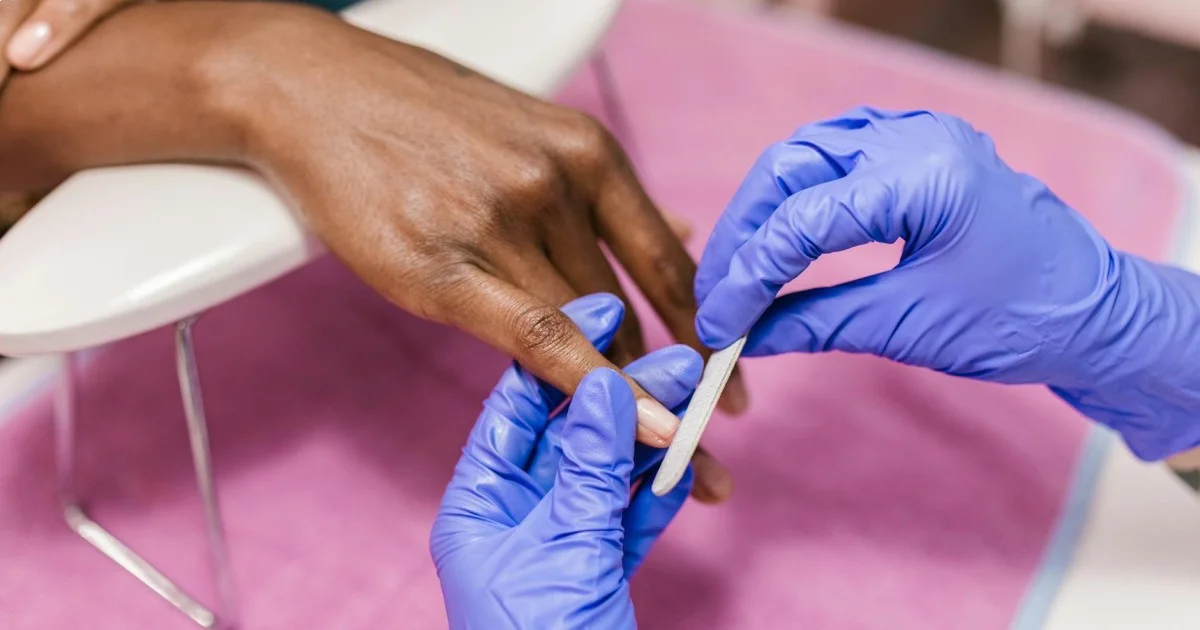
The Short Version
- Oval nails visually lengthen shorter fingers while maintaining practical durability for daily tasks
- Filing technique requires perpendicular side strokes followed by curved corner rounding to prevent breakage
- Best suited for medium-length nails with moderate nail bed width and sturdy keratin structure
- Weekly maintenance with a fine-grit file keeps the shape defined and prevents stress fractures at the apex
- Natural nail oval shapes typically last 5-7 days before requiring reshaping, depending on growth rate
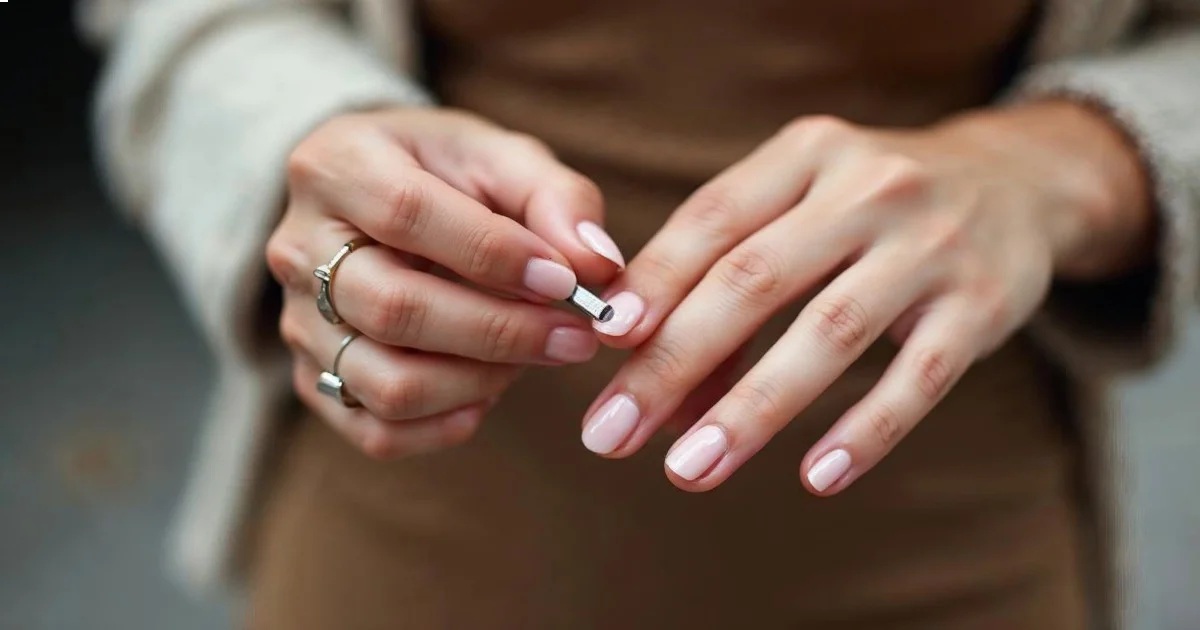
The oval nail shape is created by filing straight sides that gently taper into a rounded free edge, forming a soft, elongated silhouette that flatters most hand types. This shape requires consistent maintenance every 5-7 days to preserve its curve, making it ideal for individuals seeking an elegant, versatile look that balances durability with appearance. The technique involves filing perpendicular to the nail plate at the sides, then rounding the corners with smooth, directional strokes.

:::takeaways
- Oval nails visually lengthen shorter fingers while maintaining practical durability for daily tasks
- Filing technique requires perpendicular side strokes followed by curved corner rounding to prevent breakage
- Best suited for medium-length nails with moderate nail bed width and sturdy keratin structure
- Weekly maintenance with a fine-grit file keeps the shape defined and prevents stress fractures at the apex
- Natural nail oval shapes typically last 5-7 days before requiring reshaping, depending on growth rate
:::

I've compiled this guide based on professional filing techniques from beauty industry authorities and nail health principles established by dermatological organizations. The oval shape has gained popularity in recent years due to its adaptability across various nail lengths and its manageable nature for at-home maintenance.

## 1. Understanding the Oval Nail Shape Structure

The oval nail shape distinguishes itself through its geometric characteristics: parallel sides that extend approximately 60-70% of the nail length before tapering into a symmetrical, rounded tip. According to [OPI's nail shape guide](https://www.opi.com/blog/nail-shapes), the oval shape sits between the more dramatic almond and the utilitarian round shape, offering a middle ground that works across professional and casual contexts.

The structural integrity of oval nails depends on maintaining adequate sidewall thickness. The nail plate tapers gradually, distributing stress across a wider surface area compared to pointed shapes like stiletto or almond. This geometry matters because keratin layers respond to mechanical stress—abrupt angles concentrate force, while gradual curves disperse it. Research from the American Academy of Dermatology on nail structure confirms that maintaining nail thickness at stress points reduces breakage risk.

The apex (the highest point of the nail's curve when viewed from the side) should align with the center of the nail bed for optimal strength. When filing oval nails, this apex moves slightly forward compared to square shapes, but remains behind the free edge. This positioning creates the characteristic "egg shape" that gives oval nails their name.

For comparison with other popular shapes:

| Shape | Apex Position | Sidewall Angle | Maintenance Frequency | Breakage Risk |
|-------|--------------|----------------|----------------------|---------------|\n| Oval | Center-forward | Gradual taper | 5-7 days | Low-moderate |
| Round | Center | Minimal taper | 7-10 days | Low |
| Almond | Forward | Sharp taper | 3-5 days | Moderate-high |
| Square | Center-back | 90° angle | 7-10 days | Moderate |


## 2. Hand Type Suitability Assessment

Oval nails perform differently depending on finger length, nail bed proportions, and hand bone structure. This shape works particularly well for shorter fingers because the tapered silhouette creates vertical visual lines that draw the eye lengthwise. [Sally Hansen's hand shape guide](https://www.sallyhansen.com/us/nails/nail-care/nail-shapes) notes that oval shapes can add perceived length without the maintenance demands of almond or stiletto shapes.

For individuals with wide nail beds, oval filing helps balance proportions by narrowing the visual width through side tapering. The technique involves removing more nail material from the sides than someone with naturally narrow beds would need. Conversely, those with very narrow nail beds may find the oval shape emphasizes existing proportions rather than balancing them—round or square shapes might work better.

Bone structure considerations matter more than most guides acknowledge. Individuals with prominent knuckles benefit from the softening effect of oval tips, which draws attention away from joint definition. Those with long, slender fingers can carry the oval shape at shorter lengths (3-5mm of free edge) without losing the characteristic silhouette, while shorter fingers typically need 5-8mm of length to achieve the same visual effect.

Skin tone doesn't affect structural suitability, but observable patterns in nail art photography show that oval shapes provide more visible surface area for intricate designs compared to round shapes, while offering more stability than almond shapes for complex polish applications.

Practical lifestyle factors:

- **Typing-intensive work**: Oval nails at 3-5mm length clear keyboard keys while maintaining the shape's aesthetic
- **Manual labor**: The tapered sides reduce catch points compared to square edges
- **Athletic activities**: Moderate durability supports most sports at shorter lengths
- **Childcare**: Less sharp than almond, more practical than square for diaper changes and clothing fasteners

> **Key Finding:** Oval nail shapes suit most hand types, but individuals with naturally narrow nail beds may find the tapering emphasizes existing proportions rather than balancing them — Sally Hansen Nail Shape Guide


## 3. Essential Filing Tools and Materials

The right file makes the difference between clean shaping and damaged nail plates. Glass (crystal) nail files remain the professional standard for natural nail shaping because their permanent etched surface creates consistent results without separating keratin layers. Mont Bleu crystal files retail at $12-18 and last indefinitely with proper cleaning.

Grit ratings matter significantly:

- **180-240 grit**: Standard for natural nail shaping, removes length efficiently without excessive abrasion
- **240-400 grit**: Finishing work, smooths filed edges and refines curves
- **400+ grit**: Buffing only, not recommended for active shaping

Emery boards (cardboard-backed files) work adequately for occasional reshaping but deteriorate quickly with regular use. Their rough surfaces can create micro-tears in the nail plate if dragged across the nail rather than filed in one direction. Budget allocation: quality glass files cost more upfront ($12-18) but outperform disposable emery boards ($3-8 for multi-packs) over time.

Metal files deserve their controversial reputation. Professional nail technicians avoid them for natural nails because their coarse surfaces separate keratin layers, creating the weak points that lead to peeling. Reserve metal files exclusively for artificial nails (acrylic, hard gel).

Supplementary tools:

- **Buffing block** (4-sided, $3-6): Smooths filed edges and adds shine without polish
- **Cuticle oil** with vitamin E or jojoba ($5-12): Applied immediately after filing to rehydrate stress points
- **Nail strengthener** base coat ($8-15): See detailed options in [best nail strengthener products](https://www.nailartgear.com/best-nail-strengthener) for formulations that support filed nails

Tool maintenance extends lifespan and prevents bacterial transfer. Glass files require weekly washing with antibacterial soap and water. Emery boards should be replaced after 3-4 uses or when the grit surface shows visible wear. Store files in a clean, dry container—not loose in makeup bags where they collect debris.


## 4. Step-by-Step Filing Technique

Proper filing technique for oval nails follows a specific sequence that builds the shape methodically. Rushing or skipping steps creates asymmetry that becomes more pronounced as nails grow. [Byrdie's filing guide](https://www.byrdie.com/how-to-file-nails-5079644) emphasizes starting with clean, dry nails—moisture softens keratin temporarily, leading to uneven filing results.

**Step 1: Establish the Length**
File straight across the free edge perpendicular to the nail plate. Hold the file at a 90° angle to the underside of the nail, using smooth strokes in one direction (toward the center). Never saw back and forth—this separates keratin layers. Remove the same amount from each nail, checking frequently by placing fingers side-by-side with palms facing you. Target length: 3-8mm of free edge depending on your lifestyle needs.

**Step 2: Shape the Sidewalls**
File each side of the nail perpendicular to the growth direction, maintaining straight lines for approximately two-thirds of the total nail length. Start at the cuticle line (without touching living tissue) and work toward the free edge. Apply gentle, consistent pressure—about the same force you'd use to spread cold butter. The goal here isn't creating the curve yet, just establishing parallel sides that will support the rounded tip.

**Step 3: Create the Taper**
Begin tapering the sides where the parallel section ends (roughly two-thirds up the nail length). Angle the file slightly toward the center line of the nail, gradually reducing sidewall width as you approach the free edge. This transition zone requires the most attention—abrupt angle changes create weak points. File both sides equally, checking symmetry after every 3-4 strokes.

**Step 4: Round the Corners**
With a lighter touch, round the sharp corners where the sidewalls meet the free edge. Use curved, sweeping motions that follow the intended oval shape. Think of tracing the curve of an egg's narrow end. The apex of the curve should align with the center of your nail when viewed straight-on. This step requires 8-12 strokes per nail typically—work slowly and check progress frequently.

**Step 5: Refine and Smooth**
Switch to a finer grit file (240-400) and smooth any rough spots along the filed edges. Run the file gently along the entire perimeter of the free edge, removing micro-snags that catch on fabric. Finish by buffing the edge with the smooth side of a buffing block to seal keratin layers.

**Step 6: Seal and Protect**
Apply cuticle oil to all filed surfaces, massaging it into the free edge and sidewalls. The filing process temporarily dehydrates these areas—immediate rehydration prevents brittleness. Follow with a strengthening base coat if you plan to wear polish, or leave bare nails 24 hours before applying color to allow keratin to stabilize.

Common pressure mistakes: pressing too hard doesn't speed the process, it damages nail structure. If you're creating heat from friction, you're applying excessive force. The file should glide smoothly with minimal resistance.

> **Key Finding:** Proper nail filing technique requires working on dry nails in one direction per stroke, as bidirectional sawing separates keratin layers and leads to peeling and breakage — Byrdie Beauty Authority


## 5. Length Considerations for Durability

Oval nail length directly impacts maintenance requirements and breakage likelihood. The relationship between length and durability isn't linear—each millimeter of added length increases leverage force at the nail bed exponentially rather than incrementally.

**Short oval (3-5mm free edge)**: Maximum durability with minimal maintenance. The shape remains visible even at this length because the tapered sides create definition. Ideal for manual work, frequent typing, or anyone preferring low-maintenance nails. Expect 7-10 days between reshaping sessions as growth becomes noticeable. This length rarely experiences stress breakage unless the nail plate itself is compromised.

**Medium oval (5-7mm free edge)**: The sweet spot for balancing aesthetics and practicality. Provides enough surface area for detailed nail art while maintaining reasonable durability for daily activities. Requires reshaping every 5-7 days to maintain the oval silhouette as growth occurs. At this length, the free edge extends beyond the fingertip pad, increasing catch risk on fabrics and corners.

**Long oval (7-10mm free edge)**: Demands careful handling and frequent maintenance. The extended length amplifies lateral stress—catching the side of a nail on a door frame or keyboard creates significant force at the attachment point. Weekly maintenance becomes necessary, along with conscious modification of hand movements during daily tasks. This length works best for individuals with naturally strong, thick nail plates.

**Extra-long oval (10mm+ free edge)**: Enters diminishing returns territory for natural nails. The oval shape's structural advantage over pointed shapes diminishes as length increases because the tapered sides reduce load-bearing width at the free edge. Consider enhancement options (gel overlay, acrylic tips) at this length to provide structural reinforcement.

Growth rate variability means maintenance schedules differ by individual. Average nail growth runs 3-4mm per month, but this varies with age, nutrition, and genetics. Fast growers (4-5mm monthly) need more frequent reshaping to maintain oval proportions—unchecked growth gradually transforms oval shapes toward almond profiles as the tapered tips extend.

Practical length recommendations by lifestyle:

| Activity Level | Recommended Length | Maintenance Frequency | Enhancement Suggested |
|----------------|-------------------|----------------------|----------------------|
| High manual work | 3-5mm | 7-10 days | Optional strengthener |
| Office/keyboard work | 5-7mm | 5-7 days | Base coat minimum |
| Light duty/retired | 7-10mm | 5-7 days | Gel overlay helpful |
| Special occasion only | 10mm+ | 3-5 days | Acrylic/hard gel |


## 6. Weekly Maintenance Protocol

Consistent maintenance prevents the gradual shape degradation that requires complete refiling. A structured weekly routine takes 10-15 minutes and extends the time between major reshaping sessions significantly.

**Day 1-2 post-filing**: Monitor for any rough spots or snags along filed edges. These typically appear within 48 hours as microscopic irregularities become more pronounced through normal use. Address immediately with a fine-grit file (240-400)—a few gentle strokes prevent fabric catching that leads to tears.

**Day 3-4**: Check symmetry as new growth emerges from the cuticle line. Natural nail growth isn't perfectly uniform across all fingers. Dominant hand nails typically grow slightly faster due to increased blood circulation from use. Compare nails side-by-side in good lighting to spot emerging asymmetry early.

**Day 5-7**: Perform minor reshaping if needed. As 1-1.5mm of new growth appears, the oval proportions begin shifting—the straight sidewalls effectively lengthen while the rounded tip remains constant, gradually skewing the shape toward almond. Light filing along the upper sidewalls (near the free edge) maintains the taper ratio without removing significant length.

Weekly maintenance tasks:

1. **File spot corrections**: Address any chips or breaks immediately using the proper technique (see section 4). File the entire nail to match rather than just smoothing the damaged area.

2. **Oil application**: Apply cuticle oil daily, focusing on the free edge and sidewalls where filed surfaces remain most vulnerable to dehydration. Massage oil into the hyponychium (skin under the free edge) to support healthy attachment.

3. **Shape verification**: Hold hands at arm's length, fingers together, palms facing you. The oval curves should mirror each other across all nails. Any nail that looks noticeably different requires adjustment.

4. **Strengthener reapplication**: If using a nail strengthener base coat, reapply every 3-4 days according to product instructions. Most formulations work through flexible polymer networks that degrade with water exposure and mechanical stress.

5. **Length assessment**: Decide whether current length remains practical for your activities. If you're modifying behavior to protect nails (avoiding certain tasks, changing how you type), consider trimming back 1-2mm.

Signs that maintenance is overdue:
- Nails catch on fabrics regularly
- Visible asymmetry between similar fingers (index to index, etc.)
- White stress lines appearing parallel to the free edge
- Sidewalls appear straight rather than slightly tapered
- Free edge shows any splitting or layering

The [American Academy of Dermatology's nail care guidelines](https://www.aad.org/public/everyday-care/nail-care-basics/healthy-nails) emphasize keeping nails at a length you can maintain consistently rather than pushing for maximum length that requires constant repair. This principle applies particularly to oval shapes, which lose their defining characteristics when maintenance lapses.

For individuals who struggle with consistent maintenance, shorter oval lengths (3-5mm) or alternative shapes like [round nails](https://www.nailartgear.com/round-nail-shape) require less frequent attention while still providing an attractive, finished appearance.


## 7. Preventing Common Filing Mistakes

Specific filing errors create predictable failure patterns that compromise nail integrity. Recognizing these mistakes early prevents weeks of recovery time.

**Mistake 1: Asymmetric Tapering**
Filing one side of the nail more aggressively than the other creates off-center curves. The nail appears to point left or right rather than straight ahead. This happens when you file from the same angle for both sides—right-handed filers naturally apply more pressure on right-side strokes. Solution: rotate your hand position rather than the file angle, or file each nail with the hand repositioned for optimal file approach.

**Mistake 2: Over-Thinning Sidewalls**
Removing too much material from the sides to achieve a dramatic taper weakens the entire structure. The nail becomes flexible and prone to bending under normal pressure, which leads to stress cracks at the apex. Adequate sidewall thickness matters more than achieving an extreme curve. If you can see light through the filed sides when holding the nail to a lamp, you've removed too much material.

**Mistake 3: Creating a Point Instead of a Curve**
Oval nails should have a rounded free edge, not a V-shape. This occurs when corner rounding stops too soon, leaving a narrow point rather than a smooth curve. The distinction: oval tips are blunt enough that you could comfortably press them against your palm; pointed tips would be uncomfortable. Use your fingertip as a guide—the nail free edge should roughly mirror the curved shape of your fingertip pad.

**Mistake 4: Filing Too Close to Skin**
Aggressively filing at the base of sidewalls (near the lateral nail folds) can damage the nail matrix—the living tissue that generates new nail cells. This manifests as ridges or irregular growth patterns that appear 3-4 weeks later as the affected area grows forward. Maintain 1-2mm clearance from all living tissue. If you feel any pinching or discomfort while filing, you're too close.

**Mistake 5: Ignoring the Underside Free Edge**
Failing to smooth the underside of the filed free edge leaves rough keratin that catches on fabric and skin, leading to forward peeling. After filing the top and sides, flip your hand and lightly run the file along the underside edge at a 45° angle, smoothing the transition between nail plate and free edge tip.

**Mistake 6: Using Dull or Contaminated Files**
Worn-out files with degraded grit surfaces require excessive pressure to remove material, which damages nail structure. Contaminated files transfer bacteria and fungal spores between nails. Replace emery boards every 3-4 uses; wash glass files weekly with antibacterial soap.

**Mistake 7: Filing Immediately After Water Exposure**
Showering, washing dishes, or swimming temporarily softens the nail plate through hydration. Filing wet or damp nails creates uneven results because softened keratin compresses under file pressure, then rebounds when dry. Always wait 30-60 minutes after water exposure before filing. This is crucial because it's the single most common cause of shape irregularities.

Recovery from filing mistakes depends on severity. Minor asymmetry can be corrected immediately by removing material from the over-filed nail's opposite side. Major mistakes (over-thinning, matrix damage) require growing out the affected area completely—typically 8-12 weeks for full recovery.

Preventive strategies:
- Work in bright, direct lighting that clearly shows nail edges
- File in 3-4 short sessions rather than one long session to prevent "filing blindness" where you stop noticing gradual changes
- Take photos of your nails immediately after professional filing to use as reference for DIY maintenance
- Set a timer for 2-3 minutes per nail to prevent over-filing from rushed work


## 8. Polish and Design Considerations

The oval nail shape provides distinct advantages for certain polish applications while creating challenges for others. Understanding these characteristics helps with design selection and execution.

The tapered sidewalls create a natural framing effect that makes color appear more concentrated toward the center of the nail. This optical effect benefits gradient designs, where the color transition from cuticle to tip appears more dramatic on oval nails compared to square shapes. For [DIY gradient nails](https://www.nailartgear.com/diy-gradient-nails), start the color transition slightly higher (closer to the cuticle) on oval nails to account for the narrowing tip.

French manicure proportions require adjustment for oval shapes. The classic guideline of making the smile line match your cuticle curve doesn't translate directly—oval tips are narrower than the base, so a perfectly curved smile line can appear too wide at the sides. For [modern French manicure variations](https://www.nailartgear.com/french-manicure-tutorial-2), either follow the exact tip curve (which will be flatter than the cuticle) or use a diagonal/sideways French that works with the taper rather than against it.

Nail art placement differs by shape. Detailed designs (florals, geometric patterns, character art) work better positioned toward the center-apex area on oval nails where surface area is maximized. Designs that extend to the sidewalls must account for the curve—straight lines appear to bend as they follow the nail contour. This matters for striping tape designs and geometric patterns.

Polish formula interactions with shape:

**Cream finishes**: Apply with slightly thicker coats on oval nails compared to square shapes. The curved edges can show streaking if the coat is too thin because brush bristles make less complete contact on curves versus flat edges.

**Shimmers and metallics**: Concentrate naturally toward the nail center on oval shapes due to the tapered geometry, creating an attractive spotlighting effect without additional technique.

**Glitters**: Require careful application at the tapered tips—heavy glitter concentration at narrow points looks unbalanced. Pat glitter polishes rather than brush them on oval nails for better distribution.

**Gel polish**: The curved free edge of oval nails needs careful capping (running the brush along the edge) to prevent lifting. The taper creates a longer perimeter relative to surface area compared to square nails, meaning more potential lifting points. For gel application and removal details, see the comprehensive guide on [how to remove gel nails safely](https://www.nailartgear.com/remove-gel-nails-home).

Stamping nail art on oval shapes requires positioning the stamper to match the nail curve—press at the center first, then roll gently toward the sides rather than pressing flat. Flat pressing on curved nails creates distorted images, particularly noticeable with text or symmetrical patterns.


## 9. Strengthening Strategies for Oval Nails

Oval nails at medium-to-long lengths benefit from targeted strengthening approaches that address their specific stress points. The tapered free edge concentrates force at the apex during lateral impacts, making this area particularly vulnerable.

Base coat selection matters significantly. Look for formulations containing:

**Calcium pantothenate and biotin**: Support keratin structure from the outside. These ingredients don't penetrate deeply into mature nail tissue (which is dead), but they reinforce the surface layers that are most vulnerable to filing and mechanical stress.

**Flexible polymers**: Create a supportive network across the nail surface that moves with the nail rather than creating rigid reinforcement that can crack. Rigid strengtheners work well for square nails with their broader free edges, but oval nails need flexibility at the tapered tips. The [best nail strengthener products](https://www.nailartgear.com/best-nail-strengthener) article covers specific formulations suitable for different nail conditions.

**Nitrocellulose base**: Forms a protective barrier that resists water penetration, which is critical because hydration-dehydration cycles weaken keratin bonds. Apply a strengthening base coat every 3-4 days, removing and reapplying rather than layering indefinitely.

Dietary support for nail strength operates on a months-long timeline—changes in nutrition affect new growth at the matrix, which takes 4-6 months to reach the free edge. Biotin supplementation (2.5mg daily) shows evidence in supporting nail thickness over time, though results vary individually. Adequate protein intake matters more than specific supplements—keratin is protein-based, and deficiency manifests as thin, weak nails.

Hydration protocol for filed nails:

**Morning**: Apply cuticle oil with vitamin E or jojoba oil, focusing on filed edges and the hyponychium. Massage for 30-60 seconds to promote absorption.

**Evening**: Reapply oil before bed—nighttime is when cellular repair processes are most active, and well-hydrated tissue repairs more effectively.

**After water exposure**: Any time your hands are in water for more than 2-3 minutes (washing dishes, showering), reapply oil within 15-20 minutes. Water exposure strips natural oils from nail tissue faster than from skin.

Environmental protection reduces stress accumulation. Wear gloves for:
- Dish washing (hot water + detergents = severe dehydration)
- Cleaning with chemicals (disinfectants break down keratin bonds)
- Gardening (soil bacteria can enter any micro-tears in the nail plate)
- Cold weather exposure (freezing temperatures make nails brittle)

The relationship between nail strength and shape longevity is direct—weak nails can't maintain medium or long oval shapes regardless of filing technique. If you're experiencing frequent breakage, the solution might be shortening to 3-5mm and focusing on [strengthening weak nails](https://www.nailartgear.com/strengthen-weak-nails) for 2-3 growth cycles (6-9 months) before attempting longer lengths.

Signs your nails need strengthening rather than just reshaping:
- Breaking below the free edge (into the pink nail bed area)
- Vertical splitting up the center of the nail
- Excessive flexibility (the nail bends noticeably when pressed)
- Peeling in multiple layers
- White spots appearing frequently (can indicate mineral deficiency or trauma)

> **Key Finding:** Consistent moisturization of the nail and surrounding skin is essential for maintaining nail health, particularly after filing or other manipulation that temporarily disrupts the nail's protective barrier — American Academy of Dermatology


## 10. Adapting Oval Nails for Different Occasions

The oval shape's versatility extends across contexts from formal events to outdoor activities, but optimal execution varies by situation. Strategic length and design choices maximize both aesthetic appeal and functionality.

**Professional/Corporate Settings**
Maintain 3-5mm length for unobtrusive elegance that reads as polished rather than attention-seeking. Neutral polish colors (soft pinks, mauves, sheer nudes) or a clean buff-and-oil finish work universally. The oval shape at this length conveys attention to detail without appearing high-maintenance. Avoid: bright colors, heavy glitter, extended lengths that make typing awkward or create distracting clicking sounds.

**Formal Events and Weddings**
This is where oval nails excel—the shape photographs beautifully from all angles and provides excellent surface area for elegant designs. Extend length to 5-7mm for maximum visual impact while maintaining reasonable durability for a full day of photos, handshakes, and activity. Classic choices include French manicures, subtle metallics, or [wedding-appropriate nail designs](https://www.nailartgear.com/wedding-nails) that complement without competing with overall styling. Schedule final filing 1-2 days before the event, not the morning of—this allows time to address any unexpected chips or irregularities.

**Vacation and Travel**
Shorter oval lengths (3-5mm) minimize breakage risk during luggage handling, outdoor activities, and unfamiliar surroundings. Choose gel polish or long-wear formulations that can survive 7-10 days without maintenance access. The oval shape adapts well to [travel-friendly nail designs](https://www.nailartgear.com/vacation-nails) that look intentional even as they grow out slightly. Pack a glass nail file and cuticle oil in carry-on luggage for emergency repairs. For summer vacations specifically, see [beach-appropriate nail designs](https://www.nailartgear.com/beach-nails) that work with the oval silhouette.

**Athletic and Active Periods**
Reduce length to 3-4mm maximum for gym sessions, sports participation, or intense activity periods. The oval shape at short lengths clears most athletic equipment while maintaining a finished appearance. Skip polish entirely or use a clear strengthening base coat only—colored polish chips are distracting during workouts and add unnecessary maintenance burden. Reapply cuticle oil after showering at the gym, as facility soaps tend to be particularly harsh.

**Creative and Artistic Expression**
Medium-to-long oval nails (5-8mm) provide the canvas size for detailed nail art without requiring the extreme maintenance of stiletto or coffin shapes. The tapered tips suit flowing designs like watercolor effects, abstract patterns, or seasonal themes. For spring and summer specifically, check [seasonal nail design collections](https://www.nailartgear.com/diy-spring-nail-art-2026) that work particularly well with oval proportions. The shape's curves enhance organic designs (florals, leaves, ocean waves) more effectively than geometric art.

**Quick Transitions**
When you need to shift between contexts rapidly (professional week to weekend event), the oval shape accommodates quick polish changes better than dramatic shape differences. Keep the base oval shape consistent at 5-6mm—this length works for most situations—and modify only the polish application. Peel-off base coats enable complete design changes in under 5 minutes without acetone removal.

Occasion-based maintenance schedules:

| Occasion | Length | Polish Type | Pre-Event Timing | Emergency Kit |
|----------|--------|-------------|------------------|---------------|
| Office work | 3-5mm | Regular or gel | Weekly touch-ups | File, clear polish |
| Wedding/formal | 5-7mm | Gel preferred | 1-2 days before | Super glue, matching polish |
| Vacation | 3-5mm | Gel or long-wear | 2-3 days before | File, cuticle oil, polish |
| Athletic | 3-4mm | None or clear | As needed | File only |
| Creative/social | 5-8mm | Any | 1 day before | File, acetone, backup design |


## 11. Troubleshooting Shape Degradation

Oval nails gradually lose their defining characteristics between maintenance sessions due to growth patterns and wear. Recognizing specific degradation patterns enables targeted corrections rather than complete refiling.

**Pattern 1: Almond Creep**
The oval shape gradually becomes almond-shaped as growth extends the tapered tips without proportionally lengthening the straight sidewalls. This happens because nail growth occurs at the base (cuticle), not at the tip—the curved portion effectively grows longer relative to the straight portion. Correction: file the upper sidewalls (the tapered section near the free edge) to widen the taper angle slightly, removing 0.5-1mm from each side near the tip without touching the free edge length.

**Pattern 2: Uneven Growth Skewing**
One side of a nail grows faster than the other (common on index and middle fingers of the dominant hand due to increased circulation), causing the oval curve to shift left or right off-center. Correction: file the faster-growing side more aggressively at the upper sidewall, removing the excess taper to recenter the curve. This requires checking all nails together rather than individually—symmetry between fingers matters more than perfect execution on a single nail.

**Pattern 3: Flat-Spot Development**
Repeated impact at specific points (keyboard spacebar contact, phone typing) creates flat spots along the curved free edge. The nail literally wears down at high-contact points. Correction: file the entire free edge to match the flattest point, then rebuild the curve.